Posts

Showing posts with the label Nature

Sinkholes; how do sinkholes form?

Image
Imagine the ground beneath your feet or your house suddenly collapsing and forming a large hole in the ground. It's a terrifying thought. Sinkholes are uncommon, but when they do develop, they can be fatal. Sinkholes form when the ground underneath the land surface is unable to support it. Sinkholes can occur for a variety of causes; continue reading to learn more about them. Sinkholes are widespread in areas where the geology beneath the land surface contains limestone, carbonate rock, salt beds, or rocks that can be dissolved naturally by groundwater passing through them. Underground caves and caverns form as the rock degrades. Sinkholes are spectacular because the land normally remains intact for a long time until the subsurface areas get too large. A abrupt collapse of the ground surface can occur if there is insufficient support for the land above the voids. Formation of sinkhole; Image credits - cartleton.edu What is a "sinkhole"? When it rains, water stays inside t...

Why do birds crash into glass windows?

Image
Daytime and nighttime crashes are the two most common types of window collisions. Birds smash into windows in the daylight because they perceive greenery reflected in the glass or look through the glass to potted plants or vegetation on the other side. Nocturnal migrants (which include most songbirds) smash into illuminated windows at night. Lights, for unknown reasons, divert nocturnal migrants from their intended course, especially in low-ceiling or foggy environments. They mill about in the lit space, occasionally bumping with one another or the lighted structure. As a result of being thrown off course by urban illumination, migrants may roost safely nearby, only to be exposed to daytime reflections in windows the next day. More information on this subject can be found in the Bird Cast initiative and the Fatal Light Awareness Program. Birds crashes into glass windows, Image credits; Sweet Bela Vita Another reason is that birds will sometimes attack their reflection in a glass. This ...

Why do cats have vertical pupils?

Image
Peering into the eyes of different animals, you’ll see some extraordinarily shaped pupils. why?  Cat with vertical pupil, Image credits: catster.com It turns out that the shape of an animal's pupils is a good indicator of its ecological role. The hollow aperture in the iris, the eye's band of pigmented muscle, is marked by pupils. They're the openings via which light enters the eye, strikes the retina, and activates light-sensitive cells, triggering the visual process. Because most of the light that enters them is absorbed, pupils are black. Their size changes in reaction to light, medications, and emotional and mental states, although their basic shape differs widely between species. House cats, for example, have vertically enlarged pupils and are nocturnal predators. These formations expand dramatically in the dark, absorbing all available light. They shrink into slits when the light is bright. Cat pupils are so adaptable that their maximum area is 135 times larger than t...

Melting and breaking of glacier content at Antarctica regions!

Image
After reaching the lowest extent ever measured in the satellite record in late February 2022, sea ice around Antarctica began to rebuild. On a smaller scale, however, the transition from melting to freezing can be abrupt. In March, for example, a patch of old sea ice near the Land Glacier in West Antarctica broke away as new ice formed. Part of the glacier's ice tongue crumbled at the same moment. Recent status of glacier, image credits: Nasa earth  Michael Lowe, an analyst at the United States National Ice Center, has been keeping a careful eye on this stretch of the Antarctic coast known as Marie Byrd Land. Lowe stated, "I've been keeping a watch on that area for the previous two months as a significant section of extremely old fast ice began to break apart." "I saw the tip of the Land Glacier was starting to break off while comparing two SAR photographs from consecutive days." The changes may also be seen in this set of natural-color photos taken by the M...

Why do bees die when they sting?? ๐Ÿ˜ต๐Ÿ˜ฎ

Image
  You feel pain, itching and annoyance when bees stings. That's because the bees jabs its barbed stinger into your skin and release some venom, which contains proteins that cause pain and can affect your immune system and skin cells.   Figure 1: Bee stings apparatus, credits: frontiers But it's nothing compared to what the poor tiny bee has to go through. You'll be fine after a few hours, but the bee won't๐Ÿ˜ต๐Ÿ˜ฎ . Honey bees don't strike people unless they feel threatened or if you step on them mistakenly. The real issue is that the bee can't get its barb stinger out of your skin after stinging you. The only way to break free is to leave the stinger. The stinger is not only a good defense mechanism, but it also contains parts of the bee's digestive tract, nerves, and muscles, which are all necessary for the bee to function properly. So, after losing everything, this tiny creature perishes. Autotomy is the process of leaving a body component behind as a sort o...

Have you ever thought that parrots can talk like human!!!!๐Ÿ™†๐Ÿ™†

Image
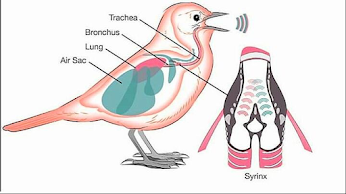
 According to study on monkeys vocal tract, the result shows that they have strikingly similar vocal structure to humans. But despite all these similarities, they can’t speak so here’s a question. Compared to monkeys, birds are nothing like us. Some bird can talking like us, How??๐Ÿ˜ฎ๐Ÿ˜ฎ Lips aren't found on birds. They are toothless. Their "nose" isn't the same as ours, but they do have something that we don't. They have a completely different vocal box than we do. It's known as a Syrinx. They actually have two voice boxes, one for each of them. The lower respiratory system of birds and humans is formed like an upside down slingshot. The trachea, or windpipe, is on top, and the lungs are on the bottom, and these two sections carry air in and out. The larynx, which is placed above the trachea in humans, is the voice box. It has "folds" in the vocal folds that vibrate when air passes through them, producing sound. Humans shape that sound mostly with thei...

Did you know that the Atlantic and Pacific oceans never mix!!

Image
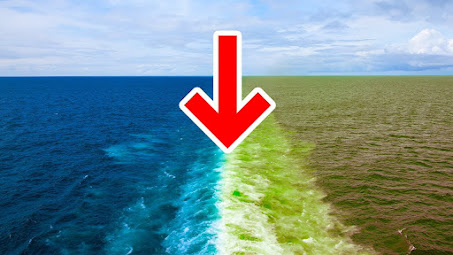
  When you look at the seas and oceans on the map you might think that they just flow into each other. well, you will be amazed at how realistic the borders between them are! you will be wonder What could interfere with its mixing? ๐Ÿ˜ฒ The actual things is that water can be different too. The water of the Atlantic and Pacific oceans have different density and chemical make-up, the level of salinity and other qualities. We can see by their colour that they are far for being the same. The borders between two bodies of water with different physical and biological characteristics are known as ocean clines. ๐Ÿ’ง๐Ÿ’ง Haloclines๐Ÿ’ง๐Ÿ’ง They are borders between water with different salinity. This is what we see when the Atlantic and Pacific oceans meet. The famous explorer Jacques Cousteau found this when he was deep diving in the strait of Gibraltar. The layers of water with different salinity looked like they were divided with a transparent film, and each layer had its own flora and fauna. Haloc...